- HomeHome
- InspirationInspiration
- Rooms To Go BlogRooms To Go Blog
- How to Choose the Perfect Pillow

Loft, Firmness, Fill & More: What to Know To Find Your Perfect Pillow
Finding the right pillow can be the difference between waking up refreshed and starting your day with neck pain. While many people research mattresses, pillows often get overlooked, even though they play a critical role in spinal alignment and sleep quality. The perfect pillow depends on your preferred sleep position, body type, and personal comfort needs.
Whether you sleep on your back, side, or stomach, the right loft, firmness, and fill material will keep your head and neck properly supported throughout the night. In this guide, we break down exactly how to match your pillow to your sleep style so you can build a bedroom setup that truly works for you.
A pillow does more than cushion your head. It fills the gap between your neck and the mattress, maintaining the natural curve of your cervical spine. When that gap is not properly supported, you can develop stiffness, headaches, and disrupted sleep. According to the Sleep Foundation, an unsupportive pillow is one of the most common and easily fixable causes of neck and shoulder pain during sleep.
The right pillow also works in tandem with your mattress. A plush mattress allows your body to sink deeper, which may require a different pillow height than a firm mattress would. If you are still evaluating your mattress, exploring queen or king mattress options at Rooms To Go can help you build a cohesive sleep system.
Your sleep position is the single most important factor when selecting a pillow. Each position places different demands on your neck and spine, which means loft (pillow height) and firmness need to be tailored accordingly.

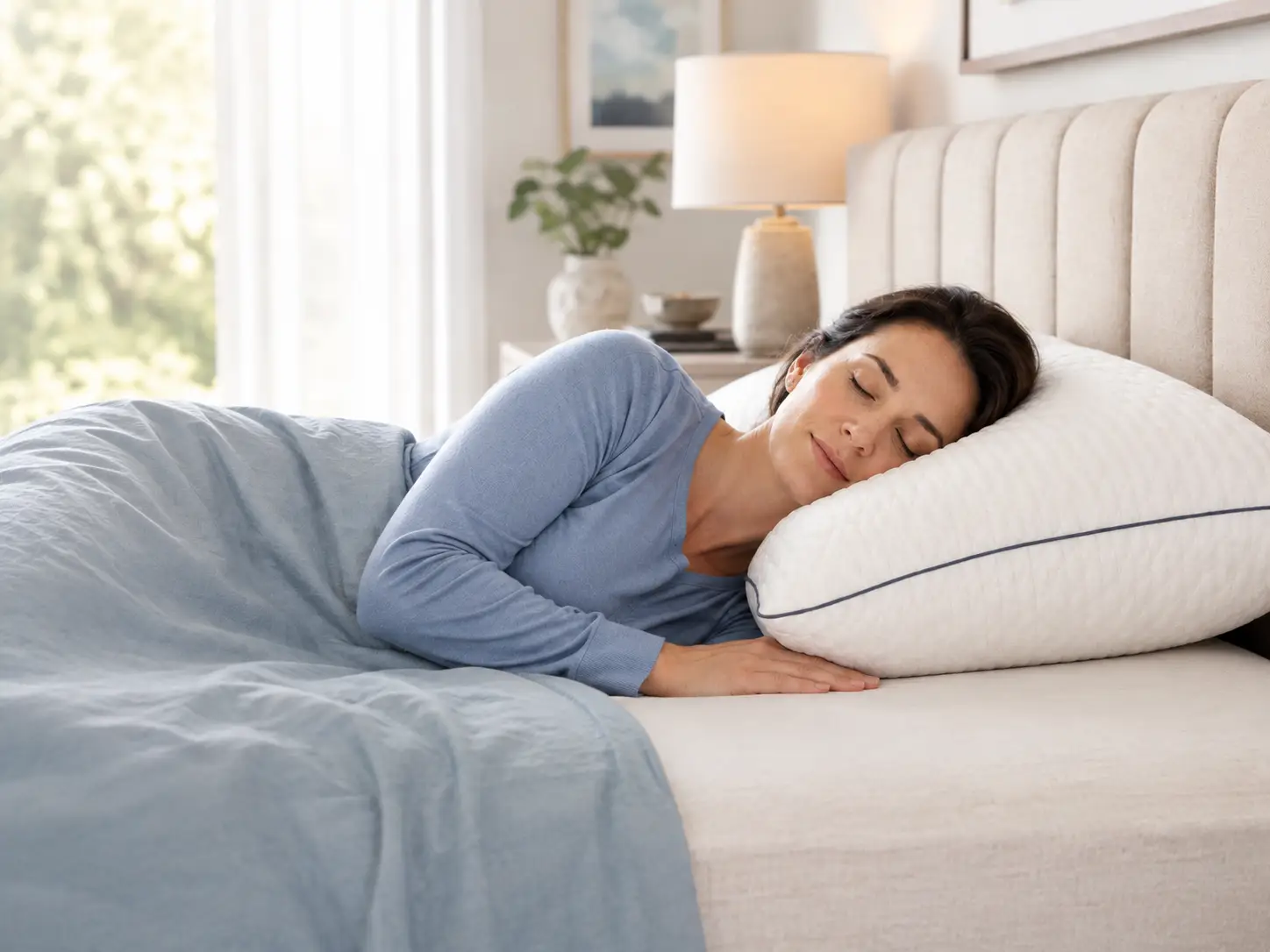
Side sleepers need the most support because the gap between the head and mattress is widest in this position. A medium-to-high loft pillow with firm or medium-firm support keeps the spine in a straight, neutral line from the neck through the lower back. Memory foam and latex pillows tend to work well for side sleepers because they contour to the shape of the head and neck without collapsing.
If you are a side sleeper, look for a pillow that is roughly 4 to 6 inches thick. Your ear should rest comfortably without your head tilting up or down.

Back sleepers need a pillow with medium loft and moderate firmness. The goal is to support the natural curve of the neck without pushing the head too far forward. A pillow that is too thick can strain the neck, while one that is too flat offers no support at all.
Memory foam pillows with a contoured shape are a popular choice for back sleepers because they cradle the head while supporting the cervical spine. Down alternative fills also work well when they offer enough structure to hold their shape through the night.

Stomach sleepers need the thinnest, softest pillow available, or in some cases, no pillow at all. A high-loft pillow forces the head upward and hyperextends the neck, which can lead to pain and poor sleep quality over time.
If you prefer sleeping on your stomach, look for a pillow with a low loft of around 2 to 3 inches. Soft down or down alternative fills compress easily and keep the head close to the mattress surface.
Choosing the right fill material affects everything from support and breathability to durability and allergy concerns. Here is a quick comparison of the most common pillow fills available today.
| Fill Type | Support Level | Best For | Key Benefit |
|---|---|---|---|
| Memory Foam | Medium to Firm | Side and back sleepers | Contouring pressure relief |
| Latex | Medium-Firm | All positions | Responsive, durable support |
| Down | Soft | Stomach sleepers | Lightweight, compressible |
| Down Alternative | Soft to Medium | All positions | Hypoallergenic, affordable |
| Gel-Infused Foam | Medium to Firm | Hot sleepers | Temperature regulation |
If allergies are a concern, down alternative and gel-infused foam options provide a comfortable, hypoallergenic sleep experience without sacrificing support.
Your pillow and mattress should work together as a system. A softer mattress allows your shoulders and hips to sink in, which reduces the gap your pillow needs to fill. In that case, a lower-loft pillow may be sufficient. A firmer mattress keeps your body elevated on the surface, increasing the space between your neck and the bed, which calls for a higher-loft pillow.
When pairing a new pillow with your sleep setup, consider the firmness of your current mattress and the options available at Rooms To Go. If you are building a full bedroom refresh, coordinating your mattress, pillows, and bedroom furniture from Rooms To Go ensures everything works in harmony.
Kids need properly sized pillows too. An adult-sized pillow can push a child's head out of alignment, so look for smaller, low-loft options with soft to medium support. Down alternative fills are a smart choice for children because they are hypoallergenic and easy to wash.
When setting up a child's sleep space, the right pillow pairs well with age-appropriate kids bedroom furniture designed to support growing bodies and changing needs.
Even the best pillow has a lifespan. Most sleep experts recommend replacing your pillow every one to two years. Over time, pillows accumulate dust mites, lose their loft, and stop providing adequate support.
A simple test: fold your pillow in half. If it does not spring back to its original shape, it is time for a replacement. Upgrading your pillow on a regular schedule is one of the easiest ways to maintain consistent sleep quality.
Choosing the right pillow is an essential piece of the sleep system. Pairing it with the right mattress and a bedroom set that fits your style creates a space designed for real rest. At Rooms To Go, you can explore a wide range of mattresses, mattress accessories, and other bedroom essentials to build a sleep setup tailored to your needs, all in one place.